Exploring the Mysteries of Black Holes: What We Still Don't Know
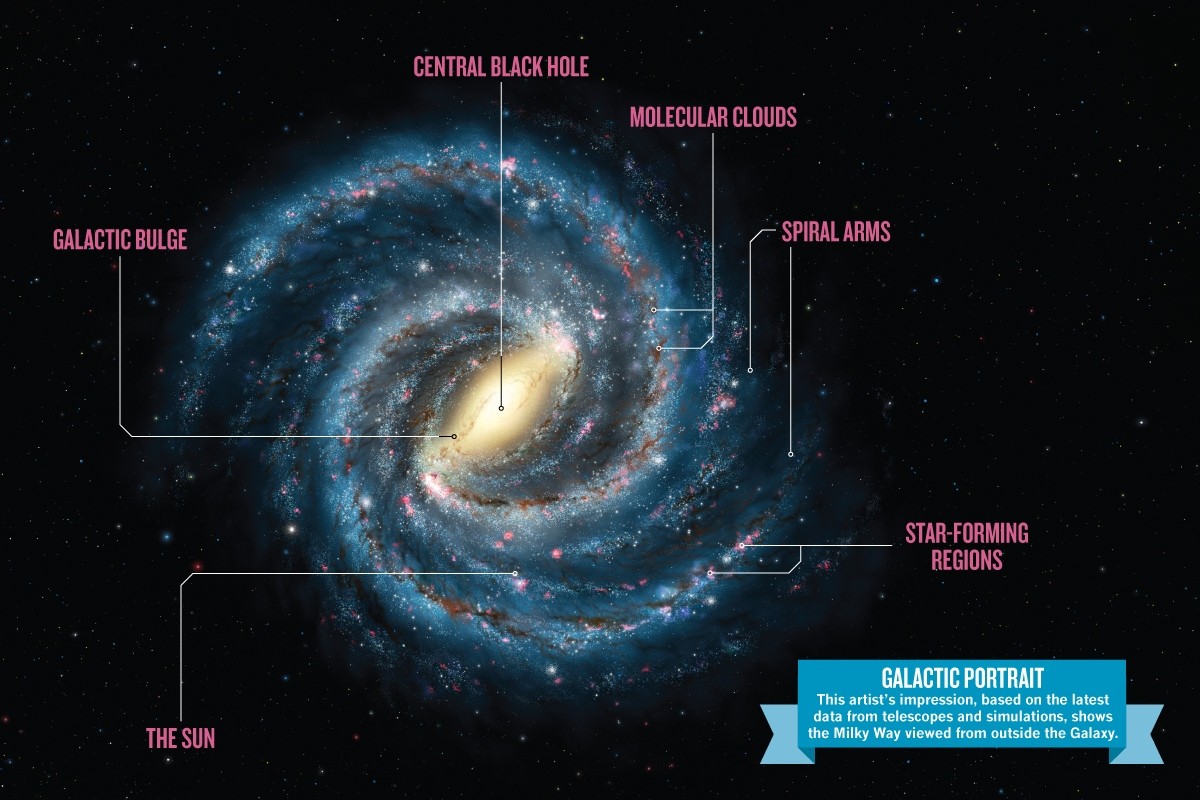
Black holes have long fascinated scientists and the general public alike, raising questions that challenge our understanding of the universe. These enigmatic entities, formed from the remnants of massive stars, are regions in space where the gravitational pull is so strong that nothing, not even light, can escape from them. Despite extensive research, the mysteries of black holes remain numerous. For instance, one of the most pressing questions is regarding their formation: How do black holes arise from different stellar processes? Additionally, there is an ongoing debate about whether supermassive black holes, which exist at the centers of galaxies, are born from smaller black holes merging over time or if they form through direct collapse of massive gas clouds.
Another major mystery revolves around what occurs at the core of a black hole, known as the singularity. Current theories suggest that this point may hold the key to uniting general relativity and quantum mechanics, yet it remains largely uncharted territory. Scientists are also exploring the implications of black holes on the broader cosmos, such as their role in galactic formation and evolution. As we advance in technology and observational capabilities, we continue to unravel the mysteries of black holes, yet many questions linger unanswered, igniting curiosity and driving further exploration into the depths of space.
Counter-Strike is a highly popular team-based first-person shooter game that pits terrorists against counter-terrorists in various objective-based missions. Players work together to complete specific goals such as bomb defusal or hostage rescue, requiring strategic thinking and teamwork. For those looking to enhance their gaming experience, check out the Top 10 Samsung Galaxy Ultra Accessories to find the best gear.
The Enigmatic Dark Matter: Unveiling the Universe's Hidden Secrets
The universe is a vast expanse filled with wonders, and at the heart of many astronomical mysteries lies dark matter. This elusive substance, which is believed to constitute approximately 27% of the cosmos, remains invisible and detectable only through its gravitational effects on visible matter. Unveiling the secrets of dark matter is crucial for understanding the formation of galaxies and the large-scale structure of the universe. Without this enigmatic component, our current models of cosmology would be incomplete, as the observed matter simply does not account for the behavior of galaxies and clusters of galaxies.
Currently, scientists are employing a variety of approaches to unlock the mysteries surrounding dark matter. Some of the most promising methods include:
- Astrophysical Observations: Studying the rotational speeds of galaxies and gravitational lensing provides insights into the presence and distribution of dark matter.
- Particle Physics Experiments: Projects like the Large Hadron Collider and underground neutrino detectors aim to identify potential dark matter particles.
- Theoretical Models: Researchers are developing advanced simulations to refine our understanding of dark matter interactions.
Are We Alone? The Search for Extraterrestrial Life in the Cosmos
The question of Are We Alone? has captivated humans for centuries, inspiring countless scientific inquiries and literary explorations. As we look into the vastness of the cosmos, we find ourselves pondering the existence of extraterrestrial life. With billions of stars and potentially habitable planets in our Milky Way galaxy alone, the possibilities seem endless. Recent advancements in technology, such as the Kepler Space Telescope and the James Webb Space Telescope, have enhanced our ability to discover exoplanets that may host conditions suitable for life. The search for extraterrestrial life encompasses various scientific disciplines, from astronomy to biology, as researchers strive to understand what life beyond Earth might look like.
The search for extraterrestrial life is not limited to observing distant planets; it also involves listening for signals from intelligent civilizations. Projects like the Search for Extraterrestrial Intelligence (SETI) analyze radio waves and other signals in hopes of detecting communication from alien species. Additionally, some scientists theorize that simple life forms may exist in the subsurface oceans of icy moons such as Europa and Enceladus within our own solar system. As we continue to explore and collect data, the question of Are We Alone? remains open, fueling both scientific research and our imagination about the mysteries that lie beyond our planetary home.